



Discover a practical guide on how to define your needs, choose the right specialists, and onboard an outstaffing team that delivers results.
Outstaffing enables companies to quickly scale up, reduce costs, and tackle complex tasks without undergoing lengthy recruitment cycles. However, if you don’t organize the process effectively, it can lead to delays and poor integration with the existing workflows. To help you avoid these pitfalls, we, together with OGDSolution ÖÜ, created a guide on how to assemble an outstaffing team from scratch.
Step 1. Define Your Goals and Needs
Before selecting specialists, clearly define your needs. Answer these key questions to avoid long interviews with candidates who aren’t the right fit.
1. Which tasks do you plan to delegate to the Outstaffing team?
Having a clear scope sets the right expectations. Determine if you need full-cycle product development or help with specific technical tasks.
For example, developing the frontend of a mobile app while your in-house team handles the backend.
2. Which roles are missing in your team to complete the tasks?
Listing the required skills or tech stack will make the selection process much easier.
For example, if you need to implement payment system integration, look for a Backend Developer experienced with Stripe or PayPal APIs.
3. How many people do you need, and for how long?
Think about whether your project requires just a few specialists for a short-term task or a larger team for several months. Some providers don’t accept short or very specific assignments, so be sure to clarify this upfront.
For example, you plan to launch a new module in a SaaS product within three months. In that case, you might need two frontend developers, one backend developer, and a QA specialist experienced in automated testing.
4. What level of expertise do you expect?
Decide if you need senior specialists with industry experience, middle-level developers with strong technical skills, or juniors for routine tasks. This approach helps prevent overspending or quality issues.
For example, you need to deliver a new feature for an e-commerce solution quickly, so it’s better to bring in a senior with relevant experience than spend time onboarding a middle-level developer.
5. What is your budget?
Your budget affects both the level of specialists and the location of providers.
For example, with $6,000–8,000 per month, you could hire a senior developer from Western Europe or a small team of middles from Ukraine who offer comparable expertise at a lower cost.
6. What are your legal and security requirements?
If GDPR compliance, NDAs, or other specific conditions apply, state them clearly from the start. This approach sets clear expectations and provides enough time to prepare the necessary paperwork.
For example, if you process personal data from EU customers, ensure that your team is prepared to work under GDPR guidelines.
We recommend turning your answers into a clear technical specification. It not only saves time but also helps the Outstaffing Company find the right specialists faster.
Step 2. Evaluate Candidates by Key Criteria
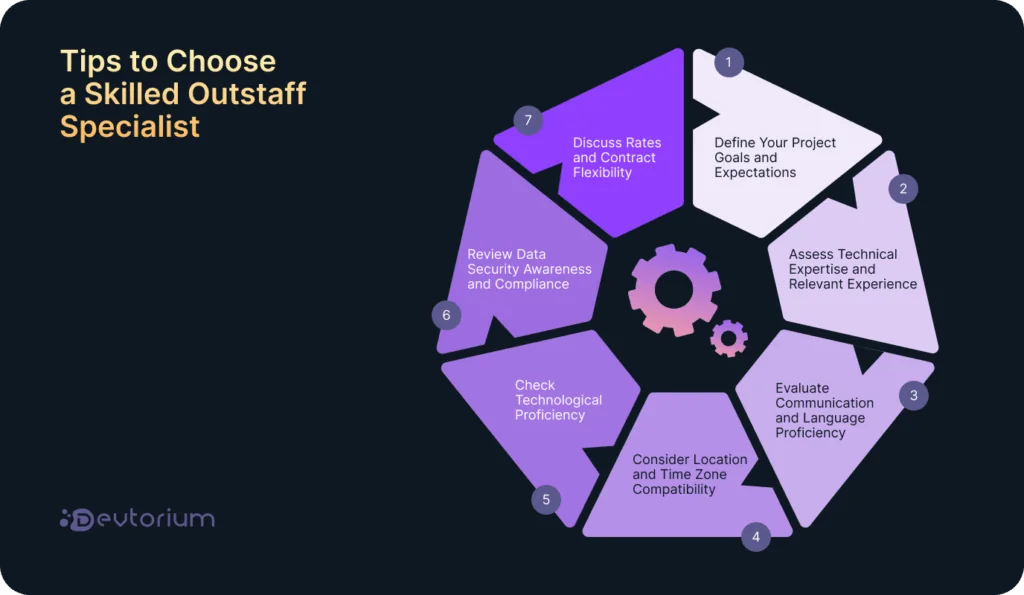
Once you’ve shortlisted candidates based on your technical requirements, the next step is to pick those who will best complement your core team. Be sure to clarify a few essential details before making your choice.
- Experience and Technical Expertise. Prioritize candidates with experience in your industry or similar projects. They’ll adapt more quickly to your specific tasks and require less onboarding. Check their portfolios and feedback from past teams to confirm their skills.
- Adaptability and Flexibility. Talk about how the specialist picks up new technologies, adjusts to the team’s workflow, and manages changes. This is vital for fast-moving projects where requirements can shift unexpectedly.
- Communication Skills. Assess the candidate’s English level, agree on preferred communication channels, and address any time zone differences. These elements impact the quality of daily interactions and the speed at which issues are resolved.
- Responsibility and Motivation. Check whether the candidate is looking for long-term cooperation. Discuss their eagerness to develop professionally and make sure your values align.
To ensure the right fit, hold live interviews with candidates. This step allows you to gauge their intentions, language proficiency, and overall commitment.
How to Simplify the Selection Process
Assembling a team requires time and effort, especially when integrating new members into your product or service. If recruitment isn’t your priority, an outstaffing company can take care of your specific needs.
- Multi-level Candidate Screening. All developers undergo a four-stage selection process, which includes technical testing, an English proficiency assessment, and evaluation of their soft skills and communication abilities. This way, you pick from a pool of pre-approved candidates.
- Guaranteed High-Level Specialists. The outstaffing company employs specialists at the middle and senior levels, all of whom have experience in international projects. This means less time spent on onboarding and more time focused on delivering real results.
- Experience Across Industries. Outstaff specialists have worked in various industries, including e-commerce, FinTech, healthcare, EdTech, media, and more. This ensures you’ll find a developer with relevant experience in your niche.
To find the ideal developers, fill out a short initial proposal form. Managers will then match Specialists based on your goals, tech stack, and budget.
Learn more in this video.
Step 3. Onboard Your Specialists
A key advantage of Outstaffing is the ability to quickly add specialists to your team. Still, the onboarding stage is critical for a smooth collaboration. To prevent confusion, focus on following essentials.
Choose the Right Model of Cooperation
Define the scope of work to determine which Outstaffing model best fits your needs.
- Full-time — Developers work exclusively on your product. It is ideal for long-term projects, heavy workloads, or when you want to fully integrate outstaffing specialists into your team.
- Pipeline Access — Specialists are involved on an as-needed basis when tasks arise. This suits unpredictable workloads, such as quick fixes, support, or short-term tasks that require minimal engagement.
- Hybrid Model — A flexible number of Outstaff Specialists supplements a stable core team for specific tasks. This option works well for projects with fixed deliverables and occasional extra duties such as releases, migrations, or integrations.
Choose the format based on workload to scale your team flexibly according to project needs.
Discuss Legal Aspects
Before starting, ensure clarity and security by reviewing and signing all necessary documents. These may include:
- A contract with the Outstaffing Company and Specialists outlining responsibilities, rights, liabilities, and termination terms.
- An NDA to protect confidential information.
- An IP agreement that assigns ownership of the developed software to you.
Also, clearly define the payment model — whether it’s a fixed monthly rate, hourly billing, or payment per sprint.
Integrating Workers into Internal Procedures

Get your Specialists up to speed from day one to avoid future problems.
- Explain your work principles: how you manage workloads, conduct code reviews, and handle deployments.
- Share guidelines, security policies, documentation, or the company’s internal “handbook.”
- Assign someone responsible for onboarding to support adaptation, answer questions, and track progress during the first weeks.
A structured onboarding process helps Outstaffing Specialists work efficiently right from the start.
Decide on Channels of Communication and Collaboration Tools
Before starting, choose the platforms you’ll use for communication. Common options include Slack, Teams, Jira, Notion, GitHub, Zoom, and others.
For example, you might focus on Slack and Jira. Create a dedicated Slack channel for the project to respond quickly to changes and keep all team members informed. Use Jira to track tasks, deadlines, and progress.
Also, agree on the frequency and format of reporting — daily stand-ups, weekly demos, or status reports.
Conclusion
To maximize the benefits of outstaffing, approach the collaboration thoughtfully and with a clear grasp of the process. Each step you take is an investment in the quality and success of your product.
To save time and effort, consider leaving the selection of specialists to the experts, such as OGDSolutions OÜ. They will review your requirements and assemble a team of vetted Developers tailored to your product and budget.

