


NDA Project
AI Climate Control Software
Our team led the AI Climate Control Software Development from scratch, creating a smart solution that adjusts HVAC systems in real-time. This product captures real-time footage of building occupancy using external cameras. Then, the data is forwarded to the cloud and processed by machine learning (ML) software. AI algorithms analyze the data to identify patterns in occupancy and environmental conditions. Based on the analysis, precise HVAC adjustments are made instantly through the cloud.
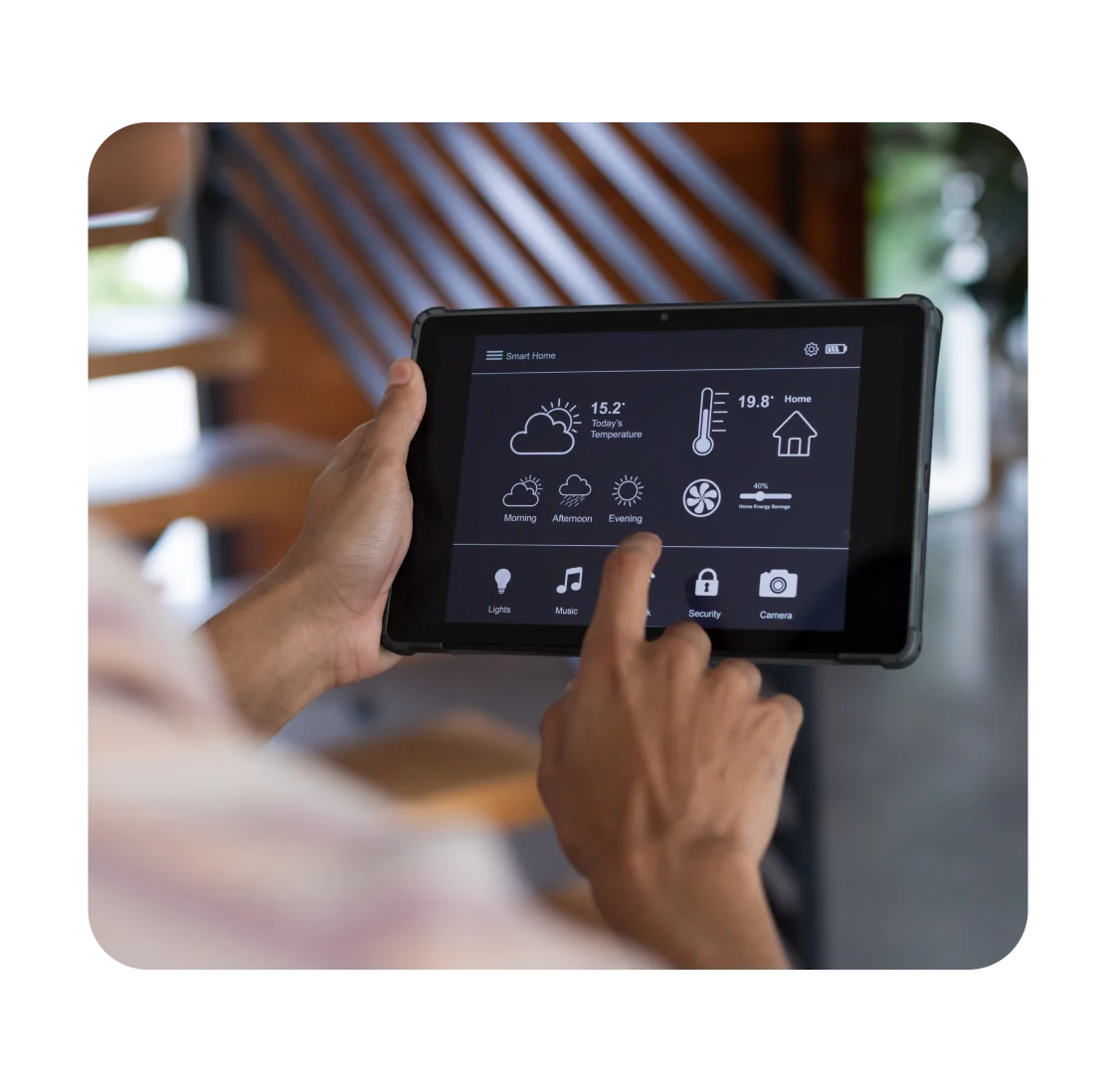
overview
About the Client
Our client is a sustainable startup determined to transform how buildings’ conditioning systems consume energy. Together, we developed a solution: AI-driven multiplatform software that reduces energy waste through a real-time climate control tool. Devtorium is glad to contribute to global sustainability and innovative building practices. This custom AI climate control software is a prime example of how Devtorium supports sustainable startups with AI software development expertise.
- Back-End
- Front-End
- Cloud Services

Challenges
Throughout this AI Climate Control Software Development Case Study, our custom AI software development team addressed these significant technical and business challenges
Develop an AI-powered software that reduces air conditioning systems’ energy waste and eliminates the need for manual temperature control.
Optimize video processing and object detection costs using parallel computing.
Provide an adaptive multiplatform layout that allows seamless access to key pages such as Sign In/Up, User Profile, Location, Room List, Conditioner, Controller, and Camera across devices.
Technologies
Back-end

Nest JS

PostgreSQL

TypeORM

Python
Front-end

React
Cloud Hosting

AWS
Solution
This project highlights our expertise in AI software development, enabling dynamic and scalable solutions for smart buildings.
The developed system features an AI algorithm that adjusts HVAC settings. It detects environmental patterns based on the number of people and AC settings. Integrating YOLOv10, a real-time object detection model, also enabled users to create rooms, assign AC units, and configure cameras.
The software system includes Dynamic & Flexible Chart that allows users to set different temperatures for the Conditioner through a chart that can edit working days and hours.
We’ve implemented both Web and Mobile versions that include user authorization, sign-in functionality, and the possibility to create essential pages such as the User Profile, Location, Home, Room, Camera, and Conditioner Info.
Devtorium team developed the Product features using Gitflow operations. Deployment setup ensured smooth integration and delivery using GitHub Actions for CI/CD, environment configuration, and AWS Cloud hosting.
Results the Client Got
The results of this AI Climate Control Software Development Case Study demonstrate how custom AI software development can revolutionize real-time climate management and deliver tangible ROI for clients.
AI/ML Detection Algorithm
Automatically adjusts room temperature based on occupancy and environmental conditions.
Integrated Hardware Controller
A separate application connects Raspberry Pi, AC units, and cameras into a unified system.
Smart Temperature Management
Optimizes climate control to enhance energy efficiency.
FAQ
Was this a custom solution or an off-the-shelf integration?
It’s a custom solution that includes different integrations.
How long did the project take from start to launch?
It’s still in progress to be launched.
What were the measurable outcomes? Did the client see ROI from the project? If so, how fast?
Measurable outcomes:
- Reducing the costs of video processing and AI detection
- Increasing quantity of cameras and AC units
- Increasing the quality of AI detection
How big was the team working on the case? Was it composed entirely of the Devtorium specialists, or did they collaborate with the client’s in-house developers?
It was entirely composed of the Devtorium specialists.
Was the solution integrated with any third-party platforms?
Yes. The solution integrated with YOLOv10, a third-party AI-powered object detection algorithm, to enable real-time occupancy detection. It also used AWS Cloud for hosting and deployment, which qualifies as a third-party cloud service. Additionally, we built the system to work with external hardware components (e.g., Jetson Orin (CUDA), AC units, and cameras).
How was testing incorporated into the product?
Testing took place at the earliest stages. We applied a shift-left testing approach, i.e., the team has already calculated potential risks at the feature discussion stage; tests the backend immediately, and only then the frontend, which reduces the number of defects/issues in the future. In addition, the team did a detailed analysis of the hardware equipment, which helped us to prepare the data closer to the real one for testing in the emulated device. If everything works on the emulated device, the team tests it on the real one. In this way (emulating a real device approach), the team significantly accelerated development because we did not wait to install real devices in a real room.
Additionally, the team is incorporating the auto-tests into the project, which helps us to determine the issue at the development stage.
How does this case prove Devtorium can deliver on my needs?
This case proves Devtorium’s strong capability in building AI-driven, cloud-hosted, multiplatform solutions from scratch. Our team developed web and mobile interfaces, implemented real-time detection algorithms, and integrated with custom hardware. If your needs involve automation, sustainability tech, IoT integration, or data-driven AI models, this project is a solid example of our ability to deliver advanced, production-ready solutions.
More Projects

Autonomous Sports Booking Ecosystem
Our team built a full-stack autonomous ecosystem for a Ukrainian startup launching 24/7 self-service table tennis venues. We linked the…

Athlete Health & Performance Management System
Our team developed a comprehensive platform from scratch to help sports organizations monitor, analyze, and optimize athlete performance and health….

Multi-Vendor Ecommerce Marketplace Platform
Our developers’ primary goal on this project is to provide expert evaluation of the feasibility and implementation of various business…
Ready to develop your solution?
Book a free consultation
