
Cloud Migration: Choosing the Right Strategy

As businesses prepare to scale or undergo digital transformation, one critical element often becomes a “stumbling block”: the data storage decision. Beyond being a question of functionality, data storage has a direct impact on security, reliability, and operational efficiency.

One of the best solutions to the dilemma is cloud migration. However, cloud-based solutions aren’t one-size-fits-all; you’ll need to consider whether a Cloud-Based, Cloud-Native, or Cloud-Enabled architecture best fits your needs.

In this article, Devtorium cloud migration experts explore these types of cloud migration and guide you through essential points to consider before the migration of data.

Common Cloud Migration Types

At first glance, cloud migration may seem straightforward. However, in reality, it requires a customized approach tailored to each company’s specific needs. Since every business is different, the path to the cloud often varies. Still, most migrations typically fall into one of five main categories:

Rehosting

Also known as “lift and shift,” this method moves your system to the cloud without changes. It’s fast, but it doesn’t fully use cloud-native features like auto-scaling or self-healing.

Repurchasing

This method involves replacing your current platform with a cloud-based alternative. It’s ideal for moving away from outdated or proprietary systems and improving operational efficiency.

Refactoring

A complex process requiring significant changes to your application architecture. Companies undergoing a complete digital transformation often choose this method.

Replatforming

This is a middle ground between rehosting and refactoring. The system migrates to the cloud with selective optimizations, enabling certain cloud features without requiring a full rebuild.

Retaining (Hybrid)

In this hybrid approach, part of the system remains on-premises while the rest is moved to the cloud. It’s useful for companies that need a gradual migration or want to keep legacy systems as backups.

Comparing Cloud-Based, Cloud-Native, and Cloud-Enabled Migration Services

Diagram illustrating five types of cloud migration strategies: Rehosting, Repurchasing, Refactoring, Replatforming, and Retaining (Hybrid), connected to a central cloud.
Visual breakdown of the five primary cloud migration strategies businesses can choose from, based on infrastructure and digital transformation goals.

Cloud-Native

Cloud-native apps are built for the cloud from the ground up. Using a microservices architecture, they can fully leverage cloud platforms such as Amazon Web Services (AWS), Microsoft Azure, or Google Cloud Platform (GCP). These apps are highly scalable and allow modular changes without disrupting the entire system.

Key benefits include:

  • Quick scaling
  • Cost-effective resource usage
  • Easy updates and real-time module changes
  • No need for expensive hardware

It’s important to note that “cloud-native” refers to the app’s architecture, not its delivery method—it can be run on-premises. While not always SaaS, these apps offer the highest degree of cloud optimization.

Cloud-Enabled

Cloud-enabled apps are legacy applications adapted for the cloud. These were initially designed for on-premise use but were later migrated to cloud environments. Although they don’t fully utilize cloud capabilities like microservices, migration can still improve efficiency.

These apps are typically more complex to scale and more expensive to maintain. However, they tend to be stable, secure, and well-integrated into company workflows, making complete replacement unnecessary or costly. Instead, partial modernization might be a better strategy.

Migration specialists can help determine which parts of the system should be updated and which should be preserved. While not the most flexible option, cloud-enabled apps can still deliver strong performance and long-term value.

Cloud-Based

Cloud-based apps sit between native and enabled solutions. They are often based on existing software but adapted to operate in public cloud environments, such as AWS or Azure. While not architected as true cloud-native systems, they gain many cloud benefits.

These include:

  • Improved scalability
  • Better availability
  • Cost-efficiency through pay-as-you-go resources

The extent of modernization depends on your team’s goals and capabilities. Cloud migration experts help identify which extensions can maximize cloud benefits without a complete rebuild. For many businesses, cloud-based apps provide a practical balance between the reliability of legacy systems and the performance benefits of cloud computing.

The proper way to implement cloud technology is through expert cloud migration consulting. Since each cloud approach has its benefits and drawbacks, the right choice depends on your company’s unique situation. Contact us today, and our specialists will guide your business cloud migration.

Key Business Benefits of Cloud Migration

Cloud migration is an excellent strategic move that delivers real business value. While on-premises systems offer control, they can’t match the flexibility and reach of the cloud.

Cost-Efficiency

Cloud migration reduces IT expenses by shifting infrastructure management to the provider. Businesses save on hardware, maintenance, and software, freeing up resources for innovation and growth.

Scalability

Cloud environments scale instantly as your business grows—no need to invest in physical servers or risk delays. You pay only for what you use, making expansion smoother and more affordable.

Accessibility

Cloud systems support remote work with 24/7 access from anywhere. This flexibility enhances team collaboration and customer service, particularly with the guidance of cloud migration experts during the implementation process.

Performance

Cloud platforms boost performance and reduce latency by hosting data closer to users. This improves speed and reliability, which is critical for companies targeting global markets.

Four Main Steps in the Cloud Migration Process

Infographic showing the four main stages of the cloud migration journey: Planning, Business Case, Migration, and Maintenance.
The four essential steps of a successful cloud migration strategy: from planning and cost justification to execution and long-term maintenance.

1. Planning

Start by defining clear goals: are you migrating all workloads, building a hybrid system, or setting up disaster recovery? Clear objectives help your cloud migration consultants choose the right tools and strategy for your business.

2. Building a Business Case

Assess the value of migration by analyzing the cost savings, efficiency, and infrastructure improvements it entails. Use cloud calculators to realistically estimate your Total Cost of Ownership (TCO), ensuring informed decisions and avoiding unexpected expenses.

3. Data Migration

Execute the migration with minimal disruption. Select the optimal timing and ensure that each component functions properly before proceeding to the next step. Careful execution decreases risks and keeps a smooth run of operations.

4. Ongoing Maintenance

Migration doesn’t stop at data transfer. Set up real-time monitoring and regular maintenance to ensure performance, reliability, and availability. Cloud environments require continuous oversight to meet your evolving business needs.

Conclusion: Why Businesses Need Cloud Migration Consulting Services

Moving to the cloud can boost your business performance, but it requires careful planning and expert guidance. Common pitfalls, such as poor strategy, compliance issues, or hidden costs, can be avoided with the help of cloud migration professionals. Whether you’re planning to expand or modernize your systems, professional consulting services ensure a cost-effective transition. Ready to take the next step? Contact us for expert support and a seamless move to the cloud.
Cloud Migration Specialists Explain Cloud-Native Vs. Cloud-Based Vs. Cloud-Enabled Software

Are cloud-native apps better than cloud-based? What exactly does cloud-enabled mean? What is the best course for an enterprise that wants to use cloud technology better? Cloud migration experts answer these and more questions that will help you understand the differences between cloud application types. Most importantly, you’ll see how migrating to the cloud can help your business and how to do this in the most cost-efficient manner.

If you aren’t already ‘up in the cloud’, your business is losing to competition more with every passing minute. So don’t waste your chance to get better, more efficient, productive, and secure.

Cloud-Based Vs. Cloud-Native Vs. Cloud-Enabled by Devtorium Cloud Migration Specialists

Cloud-Native

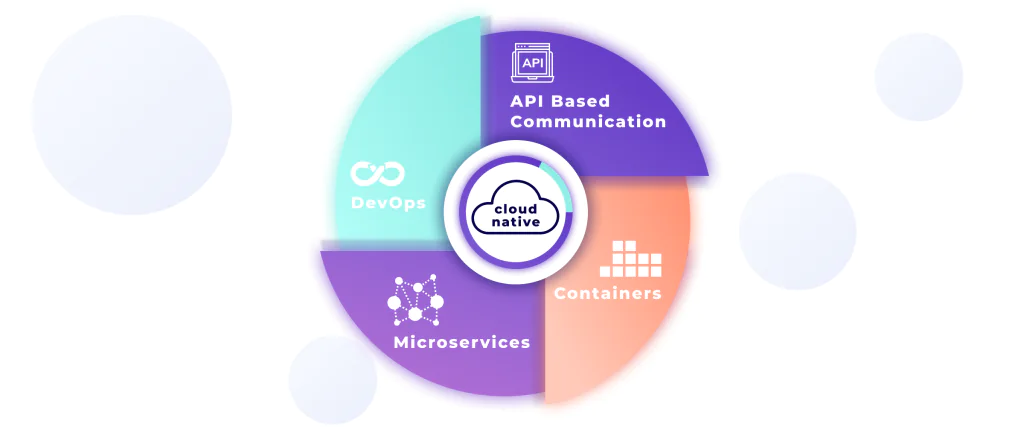
Cloud-native apps are built for the cloud from the very start. They are based on microservices architecture and can be extremely versatile and flexible. These applications are created to make the best use of cloud computing technologies. They run on public cloud platforms, such as AWS, Azure, or GCP.

Benefits of cloud-native apps include:

  • Quick and easy scaling
  • Efficient use of resources
  • Ease of making updates
  • Opportunity for real-time changes for individual modules
  • Affordability (no expensive software and hardware initial investments)

Please bear in mind that ‘cloud-native’ is a term that describes how an application is designed. The app itself can be ‘located’ on-premises and only used within one enterprise. Therefore, not all of these solutions are considered to be SaaS products.

cloud-native apps: cloud migration specialists explain

Cloud-Enabled

Creating cloud-enabled applications is where cloud migration specialists can fully exercise their skills. These are applications built initially on legacy infrastructure. However, they are later migrated to and enabled to work within the cloud.

These are monolithic applications that cannot make full use of cloud technology capabilities. Therefore, they aren’t as easily scalable as cloud-native solutions. In the majority of cases, cloud-enabled apps originally were enterprise software solutions. They are migrated to boost the overall efficiency of the organization. Some parts and characteristics of the app must be changed entirely in order to adapt to the cloud.

Cloud-enabled apps are usually rather costly to run and to update after they’ve been migrated. However, despite their drawbacks, they can be a good option for organizations that have been using them for a while. Developing an entirely new cloud-native product can be expensive. Therefore, it doesn’t make sense for many enterprises to drop the legacy apps they are using successfully.

Also, the original solutions are often well-oiled machines that are secure and boost the organization’s productivity. Therefore, cloud migration specialists usually recommend working with them instead of completely substituting them. The company’s business analysts need to do comprehensive research to evaluate whether migration or substitution is more beneficial in the long run. For all that the process can be costly and the cloud-enabled app – less flexible, its overall performance can be top-grade.

Nowadays, you can get top-quality cloud-migration consulting services to understand how to make the best use of the solutions you already have. Moreover, this might be the more cost-efficient choice in the long run.

Cloud-Based 

Cloud-based apps are a middle-ground between cloud-enabled and cloud-native options. This type of application is designed with the cloud in mind. However, it’s not architected to make the most use of cloud technology.

So, a cloud-based solution is based on a legacy application. However, it incorporates some of the top cloud advantages. These usually include scalability and availability. This type of solution can be cost-effective and efficient overall.

It becomes cloud-based when an application is moved to a public cloud server, like AWS or Azure. What happens to the app afterward in terms of extensions that enable the use of cloud technology advantages depends on the customer and developers’ creativity.

There are many ways to benefit from cloud technology for an app that’s already good. So, you’ll need to consider your options and allow cloud migration specialists to explain the pros and cons of each.

Cloud-based applications are more scalable and can be more affordable. That’s because you only need to pay for the technologies you need to use.

Devtorium Cloud Migration Specialists Recommend: Best Choice for Your Business

The choice of the best way for a business to use the capabilities of the cloud should come through obtaining professional cloud migration consulting services. Only qualified experts can evaluate the situation and identify the pros and cons of each option. Moreover, they can assess the capabilities and long-term goals of the customer to help them develop the best strategy.

Each type of cloud application has its own strengths and weaknesses. Therefore, it’s impossible to say that one is superior to all else. The choice of approach should be dictated only by the customer. It’s the needs, goals, and budget of the company that will help determine how to implement cloud technology in the most beneficial manner.

If this is your business goal, contact us! Our cloud migration specialists are ready to help take your business to the next level.

Cloud Migration Consulting Services: Introduction

Employing cloud migration consulting services is a move that can save your business a lot of money in the long run. That’s because moving to the cloud is a way to boost cost-efficiency as a whole. And when planned and carried out by experts, the process can be quick and painless.

Keep reading to learn what cloud migration consulting services can do for you and how to use them to achieve your business growth goals.

Cloud Migration Consulting Services: Benefits for Business

Moving to the cloud is not merely a progressive step to take to be in step with today’s digital society. It’s a decision that can greatly benefit multiple businesses. An on-premises infrastructure offers a substantial level of autonomy. However, in the connected world of today, it’s hardly relevant compared to the opportunities provided by the cloud.

  • Cost-efficiency.
    The first thing any cloud migration consulting services provider will tell you is that moving to the cloud reduces your expenses. It’s a move that enables you to cut spending on many tech services as the cloud provider would take them over. Therefore, the business can dedicate more resources to innovation and development.
  • Scalability.
    One of the greatest benefits of cloud migration is easy scalability. You won’t have to worry about delays as your business starts to grow. Also, you will be able to reduce costs compared to buying and installing physical servers and other equipment on site.
  • Accessibility.
    All your team members can access the cloud from anywhere. Therefore, it’s the best solution for any business working with remote employees or freelancers. In addition, cloud migration consulting services can help you understand how to use this technology to improve the user experience for your customers.
  • Performance.
    In many cases, the end-user experience can improve due to cloud migration because of a boost in performance. Cloud hosting allows to scale up when necessary to serve a bigger number of users without losing output quality. In addition, cloud services can run on servers near the user’s location. It means that the network latency can be significantly lowered for global businesses. It’s a fantastic expansion opportunity for smaller companies that cannot serve multiple locations worldwide.

Benefits of using cloud migration consulting services for business.

Essential Steps of the Cloud Migration Process

  1. Planning.
    The first step to success is developing a plan. When planning your cloud migration, you must first define your goals. For example, do you want to move all the business’ workload to the cloud? Or do you plan to use it for emergency disaster recovery? Also, you might consider using some hybrid models suited to your company’s needs. Defining your goals clearly will enable your cloud migration consulting service provider to help you select the best tools.
  2. Building a business case.
    The next stage is to build a business case. It means that you need to evaluate cloud migration from the point of view of cost savings, operational benefits, and architectural improvements. Doing this will enable you to calculate the Total Cost of Ownership, both current and expected, on the cloud. Note that you must be realistic in your estimates in order to make sound business decisions. You can use various cloud calculators to facilitate this task.
  3. Data migration.
    With the cloud migration plan ready, you will move on to executing this plan. Data migration is a process that must be carried out with minimal disruption to your business processes. Therefore, it’s crucial to choose the timing well. Also, bear in mind that it’s necessary to ensure the operability of every element before the next element is moved.
  4. Consistent maintenance.
    The actual process of migration is complete once you’ve moved your data to the cloud. However, the upkeep of it is ongoing. Therefore, you need to factor into your plan that you’ll have to set up a system to monitor the performance in real-time. Cloud operations also need regular maintenance to keep up-to-date and meet the availability benchmarks aligned with your business objectives.

Cloud migration consulting services: the process explained.

Cloud Migration Consulting Services: Common Migration Types

The cloud migration process might appear to be straightforward. However, as it’s tailored to the business requirements, no two processes are exactly the same.

That said, there are five specific types of migrating to the cloud:

  • Rehosting.
    This method is indeed straightforward. Basically, you just take the system as is and completely move it to the cloud. As this process doesn’t involve making any changes to the existing systems, it can be completed fast. However, this method also doesn’t allow you to use beneficial cloud-native features, such as self-healing and automated recovery.
  • Repurchase.
    This type of cloud migration involves either dropping your current proprietary platform or letting the license expire. Meanwhile, you are purchasing a cloud-based alternative. Such a transition can help boost business efficiency. In addition, it’s a great way to move on from legacy solutions.
  • Refactoring.
    Refactoring is a highly complex process because it may involve a complete overhaul of all your applications. The cloud migration consulting services provider you work with should guide you through planning this process. And it needs lots of planning because it might be necessary to rework the logic of your system and apps. Such migration should be an option for companies willing to enact a complete digital transformation.
  • Replatforming.
    When replatforming, you move to the cloud similarly to rehosting. However, your migration service also helps optimize some of the system’s parts in order to take advantage of cloud technology. But it won’t be a complete system overhaul, like refactoring.
  • Retain (hybrid).
    The hybrid method is used by organizations that want to combine their on-premises systems with the cloud. This type of migration must be highly customized to the organization’s needs. Such a solution is often used to have the cloud as a backup.

Challenges or Why You Need Cloud Migration Consulting Services

Moving to the cloud is a way to boost your business performance in many ways. However, it’s not a process that can be taken lightly. Hence, the need to employ expert cloud migration consulting services.

When moving to the cloud, the main challenges you’ll face come from the lack of strategy, compliance, data security issues, or incorrect cost planning. You can avoid all of those by entrusting this process to qualified professionals. Contact us if you want to ensure a seamless, affordable, and quick move to the cloud.

cookie-image
cookie-image-mobile

Our website uses cookies

We use cookies and share information about your use of our site with our social media, advertising and analytics partners who may combine it with other information that you’ve provided them.